
Nationwide Fleet Compliance services
our fleet compliance solutions
National Fleet Services is your one-stop shop for Fleet Compliance. We're here to ensure your drivers and vehicles are always ready to hit the road when you are.
FMCSA Fleet Compliance: Equipment Titling, Registration, and Permitting Services
Ensuring fleet compliance with the Federal Motor Carrier Safety Administration (FMCSA) requires proper management of equipment titling, registration, and permitting. These services help motor carriers operate legally, avoid penalties, and maintain efficient fleet operations.
Proper fleet compliance ensures motor carriers stay legal, avoid fines, and operate efficiently. Managing titling, registration, and permitting services effectively helps businesses focus on operations while staying compliant with FMCSA regulations.

Equipment Titling & Registration:
Title Processing
Assisting with acquiring and transferring vehicle titles to ensure proper ownership documentation.
State & Federal Registration
Compliance with state and federal regulations for commercial vehicle registration, including obtaining International Registration Plan (IRP) plates for interstate travel.
Unified Carrier Registration (UCR)
Ensuring carriers register their fleets under the UCR program for legal operation across multiple states.
Permitting Services:
International Fuel Tax Agreement (IFTA) Permits
Facilitating IFTA registration and reporting for fuel tax compliance across jurisdictions.
Oversize/Overweight Permits
Securing special permits for vehicles exceeding standard size or weight limits.
Hazmat Permits
Assisting with obtaining permits required for transporting hazardous materials per FMCSA and DOT regulations.
Temporary Trip & Fuel Permits
Providing short-term permits for non-IFTA and IRP registered vehicles operating in specific states.
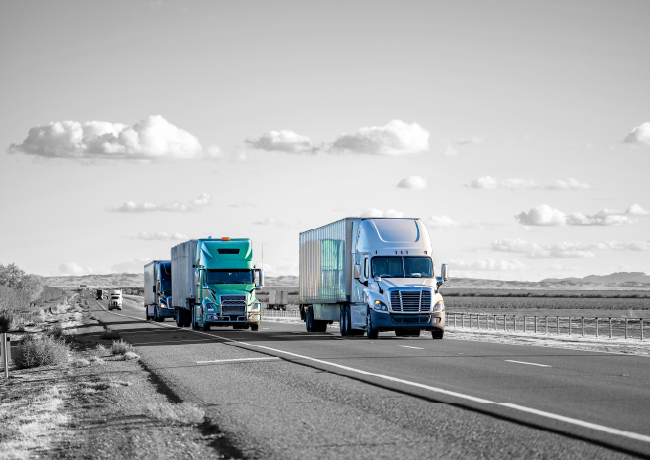
title services for all 50 states & canada
National Fleet Services can help you maintain accurate documentation of your vehicles' titles. We have deep experience working with title agencies in every state, ensuring that every vehicle in your fleet is titled in the approved manner and ready for the road.
National Fleet Services' Title Services Nationwide include:
- Lienholder processing
- Intrastate vehicle registration
- Transfer of ownership
- Duplicate titles
- New or used truck purchases
- MSO - Manufacture Statement of Origin
National Fleet Services can transfer large fleets or vehicle portfolios quickly when assets need to be titled and delivered accurately under a closing date. So whether you are undergoing an acquisition, merger, bank refinancing or lienholder status change, we can help.
vehicle registration
National Fleet Services understands that ensuring your vehicles have accurate credentials can be both frustration and time consuming. That is why we are here to help you maintain accurate vehicle credentials in an increasingly complex environment of interstate trucking - so you can reduce your costs, overhead and frustration by leaving the paperwork to us.
National Fleet Services has experience in registering and permitting vehicles in every state. We help our clients keep their trucks operating on the road with the needed credentials.
Our Vehicle Registration services include:
- Initial registration and renewal
- Specialized credential support
- Interstate permitting services
- Intrastate permitting services
- Accuracy of vehicle credentials for every vehicle in your fleet
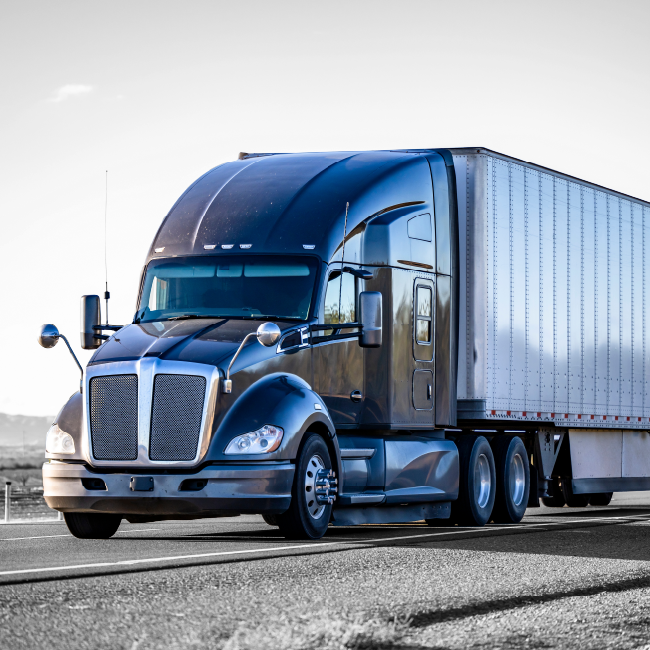
No matter where your vehicle operates in North America, we can keep your vehicles' registrations up-to-date and legal. Reduce the risk of costly fines or lost revenue by keeping registration current on all your vehicles with National Fleet Services.
We offer:
- Reduction in overpayment of sales taxes, heavy vehicle use taxes (2290), and ad valorem taxes
- Complete UCR filings and property taxes
- Submission of hazardous permit renewals
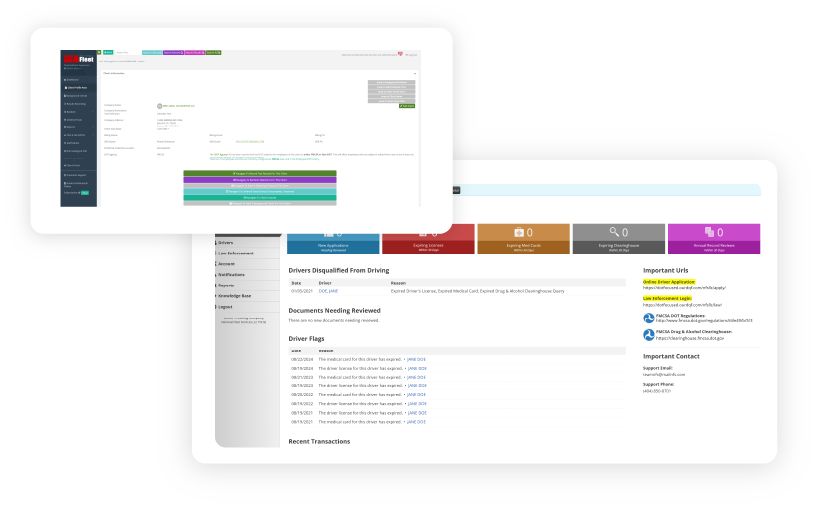
DOTFocused software
National Fleet Services DOTFocus software specializes in providing online Department of Transportation (DOT) Driver Qualification (DQ) software, designed to streamline and automate the compliance process for commercial carriers and CDL drivers.
Any questions? We Have Answers
I want to open a new trucking company, what do I need?
- Register your business and trademark the name
- File for an EIN with IRS
- Obtain a USDOT number & Authority
- Obtain a BOC-3 Agent & Insurance
- Obtain an IRP and IFTA account
How much does it cost to get your own trucking authority?
The FMCSA charges $699 to file the paperwork and get your authority issued.
What is a BOC-3 processing agent?
It’s an FMCSA agent or business that receives legal documents on behalf of a company. This includes court papers, complaints, and summons. Our related company 1+49 Process Agents LLC provides agents in all 50 states.
What is UCR?
It’s an annual fee that all individuals or companies that operate commercial motor vehicles across state or international lines must pay based on the number of vehicles.
What is biennial?
It’s an update with the FMCSA that requires entities to update their information every two years.
What is IFTA?
It's a fuel tax collection and sharing agreement for the redistribution of fuel taxes paid by interstate commercial carriers.
What is HVUT?
The heavy vehicle use tax or HVUT is a fee assessed annually on heavy vehicles operating on public highways at registered gross weights equal to or exceeding 55,000 pounds.
I bought a truck; how can I get it registered and get my plates?
You will need to title the vehicle first with your local county and then add it to your IRP account.
I am running under somebody else’s authority; can I open an IRP account?
Yes, as long as you have an Employment Agreement.
How does your drug & alcohol consortium work?
We send drivers for a pre-employment test and once negative results are received, we will add the driver into our drug pool. Testing is conducted at a designated site across the US.
I’m the owner, but I don’t drive why do I have to be enrolled in a consortium?
As an owner-operator of a commercial vehicle, even if you don't personally drive, you are still required to be enrolled in a consortium because DOT regulations prohibit single owner-operators from managing their own random drug and alcohol testing program.
I am enrolled in your consortium, but I have not been tested randomly, why?
If you are enrolled in a drug testing consortium but haven't been randomly tested, it's likely because random selection is based on a large pool of drivers from different companies, meaning the odds of being chosen for a test at any given time are relatively low, especially if your company has a small number of drivers; essentially, your chances of being selected are diluted by the larger pool within the consortium.
What is the Return to Duty process?
It's a series of steps that an employee must complete to return to a safety-sensitive job after a drug or alcohol violation. The process includes evaluation, education, treatment, and testing.
What is the FMCSA Portal? What do I need to open one?
It’s an online platform that allows users, including carriers, brokers, and state officials, to access various safety data and information systems related to commercial vehicles with a single set of login credentials. What do I need to open one? You will need to request your USDOT Pin and create a Login.gov account.
What is the Clearinghouse? What do I need to open one?
It's a central repository to track CDL driver drug and alcohol test results and return-to-duty information. What do I need to open one ? You need a valid email address and to create a login.gov account. You can use your existing login.gov account if you already have one.
What is a Query?
Detailed information about any violations found in a driver's Clearinghouse record.
I drove zero miles this quarter, do I need to file an IFTA return?
Yes, you must file a separate return each calendar quarter for each fuel type indicated on your initial or renewal application even when no miles were accrued that quarter.
fleet insights



Why We Do What We Do
At National Fleet Services, we believe in more than just business - we believe in building the future of the trucking industry. Through our dedication to its growth and sustainability, we help motor carriers succedd today while paving the way for the opportunties of tomorrow.
"I can't recommend National Fleet Services enough! I had questions about obtaining our DOT number and Ana went above and beyond to make sure we were doing things correctly."
RACH HILL
Thank you for contacting us.
We’ll get back to you as soon as possible.
We got it.
Let's set the wheels in motion
We look forward to hearing from you!

