
DOT Drug & Alcohol Testing Consortium -- "Compliant, nationwide, easy enrollment"
importance of drug & alcohol compliance
The Federal Motor Carrier Safety Administration (FMCSA) enforces strict drug and alcohol testing regulations to ensure the safety of commercial motor vehicle (CMV) drivers and the public. These regulations apply to all CDL holders operating CMVs in interstate or intrastate commerce.
Key FMCSA Drug & Alcohol Testing Requirements:
- Pre-Employment Testing – All CDL drivers must pass a drug test before starting safety-sensitive duties.
- Random Testing
– Carriers must conduct random drug and alcohol testing throughout the year, with FMCSA setting annual testing rates.
- Post-Accident Testing – Required after certain types of crashes involving fatalities, citations, or serious injuries.
- Reasonable Suspicion Testing – Conducted when a trained supervisor suspects drug or alcohol use based on observable behavior.
- Return-to-Duty Testing – Drivers who violate drug and alcohol regulations must complete a Substance Abuse Professional (SAP) program and pass a return-to-duty test before resuming safety-sensitive functions.
- Follow-Up Testing
– Conducted after return-to-duty, as determined by the SAP, with a minimum of six unannounced tests over 12 months.

DOT Drug & Alcohol Testing Consortium
A Drug & Alcohol Testing Consortium is a third-party program that helps motor carriers manage their drug and alcohol testing requirements. Participation in a consortium is especially beneficial for small carriers and owner-operators to ensure compliance with FMCSA regulations.
Our Drug and Alcohol Testing Consortium is an inexpensive program that helps you manage the complex requirements of complying with federal or state random drug and alcohol testing regulations. We manage the Consortium program for you.
The Drug and Alcohol Testing Consortium program is designed for independent CDL operators with their own Federal Motor Carrier Safety Administration (FMCSA) authority, granted by the Department of Transportation (DOT), or a company with many more CDL drivers or covered employees. Our Consortium is fully in compliance with over 8,000 collection (testing) locations nationwide.
Our program administrators will consult with you on required Policy and Procedures and Supervisor Training.
Once enrolled in our Drug and Alcohol Testing Consortium, you can expect:
- Membership designed to meet annual licensing requirements and regulations;
- Compliance with the federal and state random drug and alcohol testing requirements;
- Over 8,000 collection (testing) locations all over the country;
- Membership letter providing proof of your annual membership;
- Annual report of the Drug and Alcohol Testing Consortium detailing the testing ratios for drug testing and alcohol testing;
- Pre-employment, Post Accident, Reasonable Suspicion, Return to Duty, and Follow Up testing; and
- Ability to add or delete drivers at any time for any reason without penalty
Benefits of a Consortium:
What are the benefits of a Consortium?
- Ensures compliance with random testing pool requirements
- Manages record-keeping and reporting for FMCSA audits
- Conducts required Clearinghouse queries for drivers
- Simplifies the testing process for owner-operators and small carriers Staying compliant with FMCSA drug and alcohol regulations is essential for maintaining a safe and lawful operation. A consortium can help streamline compliance, reduce administrative burden, and ensure that all required testing and record-keeping are handled efficiently, allowing you to focus on running your business with peace of mind.
What is a Drug and Alcohol Testing Consortium?
A consortium is simply an association of independent businesses that belong to this group for a common purpose. In this case, the purpose is to provide a random drug and alcohol testing structure. This Consortium serves as a “Third Party Administrator (TPA)” for members like you. This is between government and your company, or you.
What happens once you join the Consortium program?
Once we receive your completed application, the Federal Custody and Control Form will be sent to you if require a pre-employment or initial Consortium drug test. This is the federally required form to authorize the drug test. After the specimen is collected at one of our collection sites, we will receive the results electronically within two days. Upon reviewing the results, we will issue your Certificate of Enrollment and laminated wallet membership card. This will indicate that you are in full compliance with government regulations regarding Random Drug and Alcohol testing.
Why join a DOT consortium vs. self-administered FMCSA drug testing?
Under FMCSA drug and alcohol testing regulations (49 CFR Part 382), CDL drivers performing safety-sensitive functions must be enrolled in a compliant random testing program.
While some owner-operators attempt to self-administer their DOT drug testing program, joining a DOT consortium significantly reduces compliance risk.
A DOT consortium ensures:
- Enrollment in a compliant FMCSA random drug and alcohol testing pool
- Proper random selection percentages as required by FMCSA
- DOT-compliant policies and documentation
- Supervisor reasonable suspicion training guidance
- Complete recordkeeping for FMCSA audits
- Timely testing notifications and coordination
- Audit support during DOT compliance reviews
For small fleets and owner-operators, a consortium is often the safest and most efficient way to maintain FMCSA compliance while focusing on growing your transportation business.
Is the cost of a DOT consortium worth it compared to FMCSA penalties?
Yes. The cost of DOT consortium services is minimal compared to FMCSA penalties for non-compliance.
Failure to comply with DOT drug and alcohol testing requirements can result in:
- Civil penalties that can exceed thousands of dollars per violation
- Out-of-service orders
- Increased CSA scores and audit scrutiny
- Suspension of operating authority
- Loss of contracts with brokers and shippers
- Increased insurance risk
Even one missed random drug test or improper documentation can trigger violations during an FMCSA audit.
Consortium enrollment provides predictable, transparent compliance costs — while non-compliance can create significant financial and operational disruption.
What happens if a CDL driver is not enrolled in a random drug testing pool?
If a CDL driver subject to FMCSA regulations is not enrolled in a compliant random drug and alcohol testing pool before performing safety-sensitive duties, the motor carrier is immediately out of compliance.
Consequences may include:
- FMCSA audit violations
- Civil fines
- Retroactive corrective action requirements
- Out-of-service findings
- Increased liability exposure in the event of an accident
Enrollment in a DOT-compliant random testing consortium must occur before a driver begins operating a commercial motor vehicle.
Failing to enroll a driver is one of the most common DOT compliance violations identified during safety audits.
Pricing Transparency
We believe compliance should be clear, predictable, and straightforward.
Our consortium pricing is:
- Clearly defined — no hidden administrative fees
- Scalable based on fleet size
- Transparent regarding random testing rates and pass-through lab costs
- Structured so you understand exactly what services are included
- Consortium programs which include all random testing start at $110 per driver annually.
We provide upfront pricing so transportation companies can budget confidently and avoid unexpected compliance expenses.
our general procedure for MSOs
01.
Send information request to our client detailing the need for information to complete the titling process.
02.
Research all VINs to confirm ownership/stolen/determination of title by the DMV.
03.
Contact original manufacturer of equipment to obtain duplicate copies of lost MSOs (if required).
04.
Receive duplicate MSO, issued by manufacturer.
If MSO is not obtainable, we cannot obtain a new title, and will proceed with the following steps (5-9):
05.
Send information request to our client detailing the need for additional information to complete the titling process.
06.
Research all vehicle VINs to confirm ownership/stolen/old lienholders.
07.
Complete the Application for a Certified Copy of Title (providing that the client does not have the original title).
08.
Submit the Application for a Certified Copy of the Title and supporting documentation to the DMV.
09.
Receive certified copies of titles provided by the DMV.
New Lienholder Required:
- Send information request to our client detailing the need for information to complete the titling process.
- Complete the Application of “State” Certificate of Title.
- Submit the Application of “State” Certificate of Title and supporting documents to the DMV.
- Receive titles (including lienholders), sent by the DMV.
- Confirm all titles are complete and correct.
- Send final titles to the lienholder or client.
Any questions? We Have Answers
I want to open a new trucking company, what do I need?
- Register your business and trademark the name
- File for an EIN with IRS
- Obtain a USDOT number & Authority
- Obtain a BOC-3 Agent & Insurance
- Obtain an IRP and IFTA account
How much does it cost to get your own trucking authority?
The FMCSA charges $699 to file the paperwork and get your authority issued.
What is a BOC-3 processing agent?
It’s an FMCSA agent or business that receives legal documents on behalf of a company. This includes court papers, complaints, and summons. Our related company 1+49 Process Agents LLC provides agents in all 50 states.
What is UCR?
It’s an annual fee that all individuals or companies that operate commercial motor vehicles across state or international lines must pay based on the number of vehicles.
What is biennial?
It’s an update with the FMCSA that requires entities to update their information every two years.
What is IFTA?
It's a fuel tax collection and sharing agreement for the redistribution of fuel taxes paid by interstate commercial carriers.
What is HVUT?
The heavy vehicle use tax or HVUT is a fee assessed annually on heavy vehicles operating on public highways at registered gross weights equal to or exceeding 55,000 pounds.
I bought a truck; how can I get it registered and get my plates?
You will need to title the vehicle first with your local county and then add it to your IRP account.
I am running under somebody else’s authority; can I open an IRP account?
Yes, as long as you have an Employment Agreement.
How does your drug & alcohol consortium work?
We send drivers for a pre-employment test and once negative results are received, we will add the driver into our drug pool. Testing is conducted at a designated site across the US.
I’m the owner, but I don’t drive why do I have to be enrolled in a consortium?
As an owner-operator of a commercial vehicle, even if you don't personally drive, you are still required to be enrolled in a consortium because DOT regulations prohibit single owner-operators from managing their own random drug and alcohol testing program.
I am enrolled in your consortium, but I have not been tested randomly, why?
If you are enrolled in a drug testing consortium but haven't been randomly tested, it's likely because random selection is based on a large pool of drivers from different companies, meaning the odds of being chosen for a test at any given time are relatively low, especially if your company has a small number of drivers; essentially, your chances of being selected are diluted by the larger pool within the consortium.
What is the Return to Duty process?
It's a series of steps that an employee must complete to return to a safety-sensitive job after a drug or alcohol violation. The process includes evaluation, education, treatment, and testing.
What is the FMCSA Portal? What do I need to open one?
It’s an online platform that allows users, including carriers, brokers, and state officials, to access various safety data and information systems related to commercial vehicles with a single set of login credentials. What do I need to open one? You will need to request your USDOT Pin and create a Login.gov account.
What is the Clearinghouse? What do I need to open one?
It's a central repository to track CDL driver drug and alcohol test results and return-to-duty information. What do I need to open one ? You need a valid email address and to create a login.gov account. You can use your existing login.gov account if you already have one.
What is a Query?
Detailed information about any violations found in a driver's Clearinghouse record.
I drove zero miles this quarter, do I need to file an IFTA return?
Yes, you must file a separate return each calendar quarter for each fuel type indicated on your initial or renewal application even when no miles were accrued that quarter.
fleet insights


Why We Do What We Do
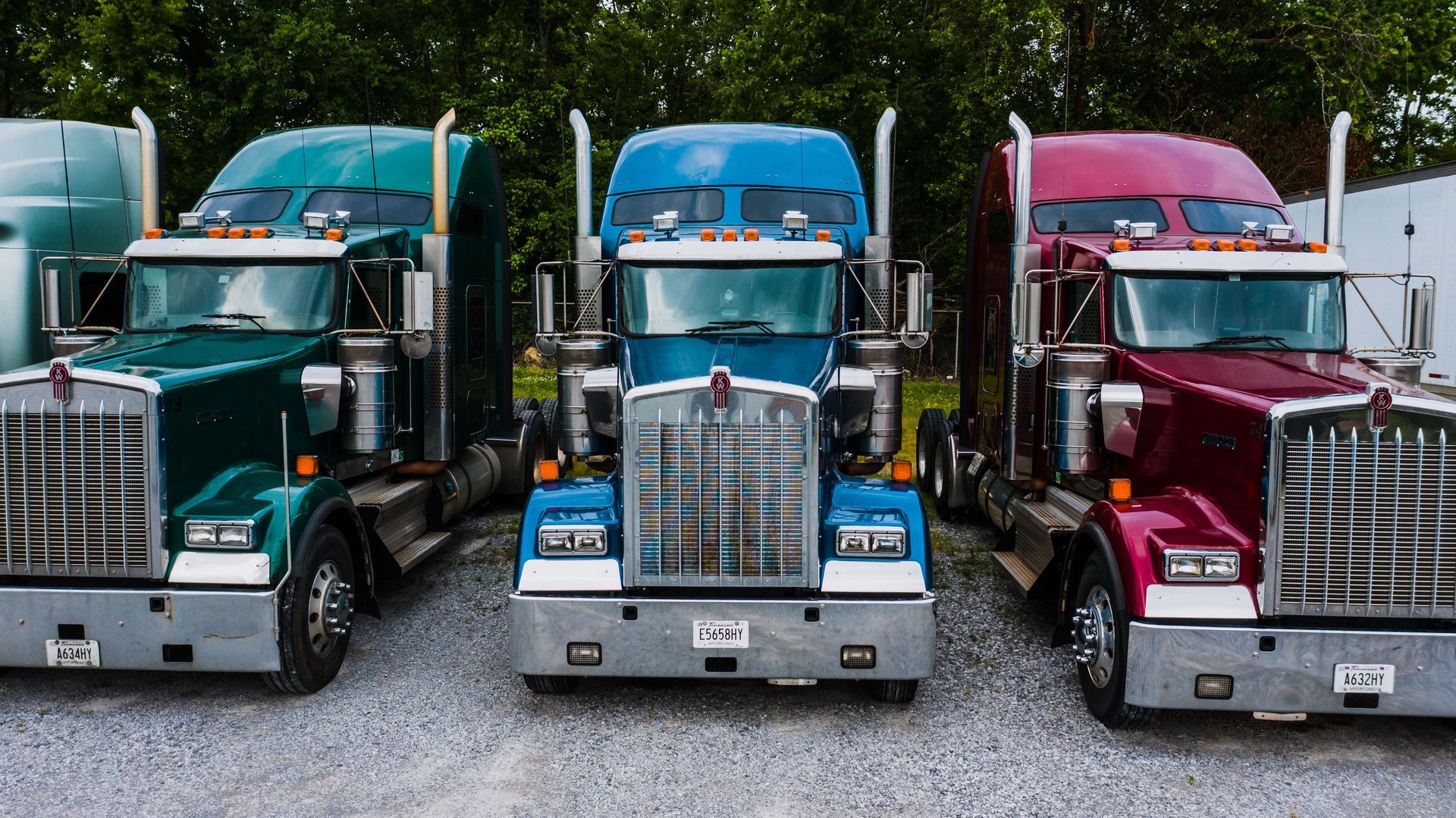
At National Fleet Services, we believe in more than just business - we believe in building the future of the trucking industry. Through our dedication to its growth and sustainability, we help motor carriers succedd today while paving the way for the opportunties of tomorrow.
"They assisted me in getting my IRP and IFTA account set up, and my FMCSA Clearinghouse Mgmt. They have a great team at NFS and truly will provide you with a quality service!"
DWIGHT HENRY
Thank you for contacting us.
We’ll get back to you as soon as possible.
We got it.
Let's set the wheels in motion
We look forward to hearing from you!

