In the transportation industry, details matter—and few details carry as much legal and financial weight as properly titling your equipment. Whether you operate a small fleet or manage hundreds of assets across multiple states, where and how you title your equipment can directly impact compliance, cost, and operational efficiency.
At National Fleet Services LLC, we see firsthand how overlooked titling issues can create unnecessary risk. Getting it right from the start—and maintaining accurate records over time—protects your business and keeps your fleet moving without interruption.
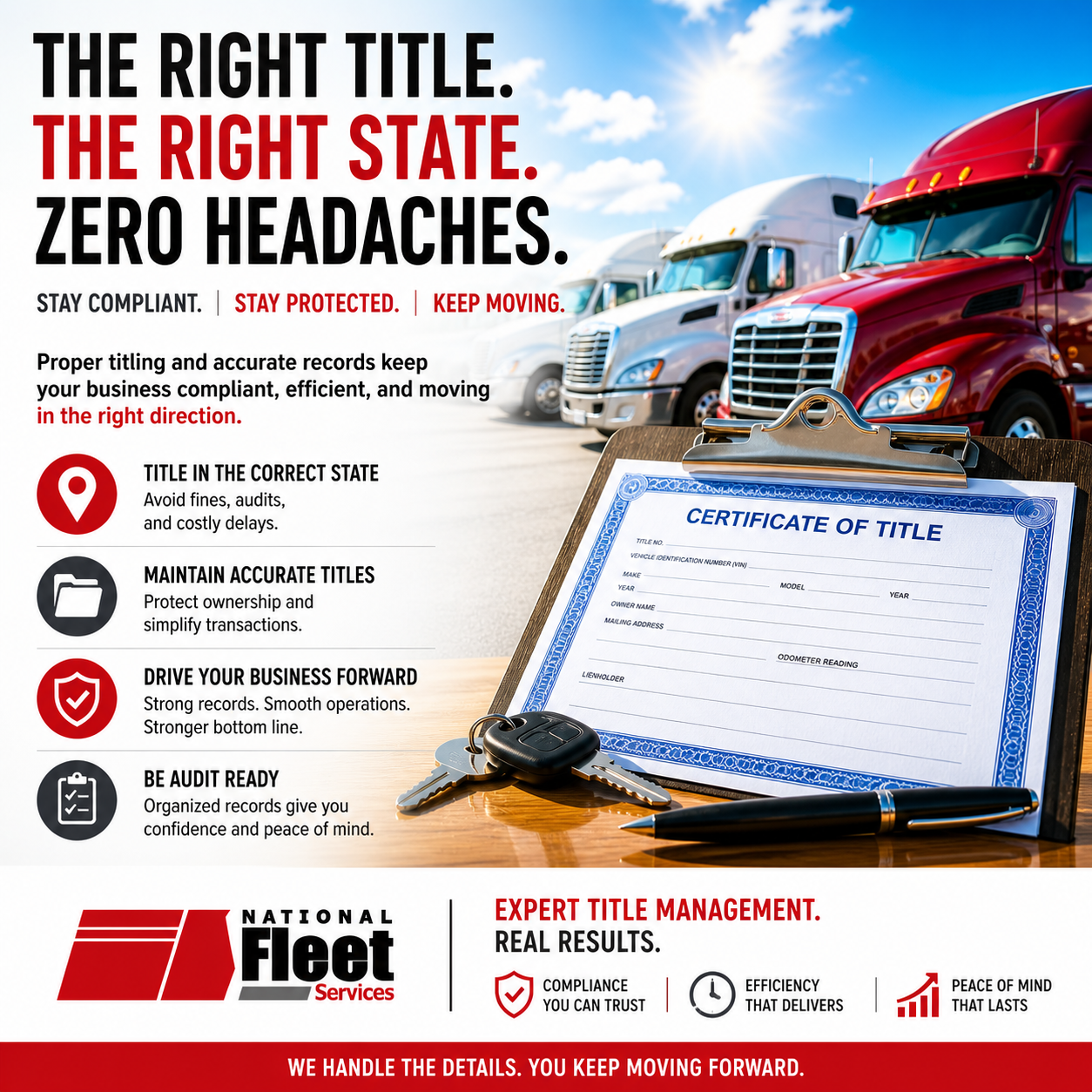
Why Titling in the Correct State Matters
Each state enforces its own rules for vehicle and equipment titling, registration, and taxation. When you title equipment in the wrong state, you expose your business to several avoidable problems.
1. Compliance Risks
State agencies expect carriers to title equipment based on established criteria such as:
- Base state operations
- Mileage distribution
- Business nexus
If your titles do not align with these factors, you may trigger audits, penalties, or even registration suspensions. Compliance is not optional—it is foundational to keeping your fleet on the road.
2. Tax Exposure
Improper titling can lead to:
- Overpayment of sales or use tax
- Underpayment that results in audits and penalties
- Missed exemptions or credits
Strategic titling ensures you pay what you owe—no more, no less—while staying fully compliant with state regulations.
3. Operational Disruptions
Incorrect titling can delay:
- Registrations
- Plate renewals
- Transfers or sales of equipment
These delays cost time and money. In a business where every mile counts, administrative setbacks can quickly become operational headaches.
The Importance of Maintaining Equipment Titles
Titling equipment correctly is only the first step. Maintaining accurate, accessible title records is just as critical.
1. Proof of Ownership
Your title serves as the legal proof that you own your equipment. Without it, you may face challenges when:
- Selling or transferring assets
- Refinancing or securing loans
- Resolving disputes or claims
Keeping titles organized and up to date ensures you can act quickly when opportunities or issues arise.
2. Audit Readiness
Regulatory audits can happen at any time. When they do, incomplete or missing title documentation can raise red flags. Maintaining clean records allows you to:
- Respond confidently to auditors
- Avoid unnecessary fines
- Demonstrate strong internal controls
3. Efficient Fleet Management
As fleets grow, so does the complexity of managing equipment. Proper title maintenance supports:
- Accurate asset tracking
- Seamless transfers between entities or states
- Faster onboarding of new equipment
Efficiency in back-office operations directly supports efficiency on the road.
Common Pitfalls to Avoid
Even experienced operators can run into titling challenges. Some of the most common mistakes include:
- Titling equipment based solely on purchase location
- Failing to update titles after relocating operations
- Mismanaging leased vs. owned equipment documentation
- Losing or misfiling physical titles
These issues often seem minor—until they become major obstacles.
How National Fleet Services LLC Helps
Navigating multi-state titling requirements requires expertise, consistency, and attention to detail. National Fleet Services LLC partners with transportation companies to:
- Determine the correct state for titling based on operational data
- Ensure compliance with all state-specific requirements
- Maintain accurate and organized title records
- Streamline processes to reduce administrative burden
Our goal is simple: eliminate risk, improve efficiency, and allow you to focus on running your business.
Final Thoughts
Titling equipment in the correct state—and maintaining those titles—does more than check a compliance box. It protects your assets, reduces financial exposure, and keeps your operations running smoothly.
In an industry where margins are tight and regulations are complex, proactive title management is not just important—it is essential.